
Materials & manufacturing methods
EPS / XPS foam fabrication
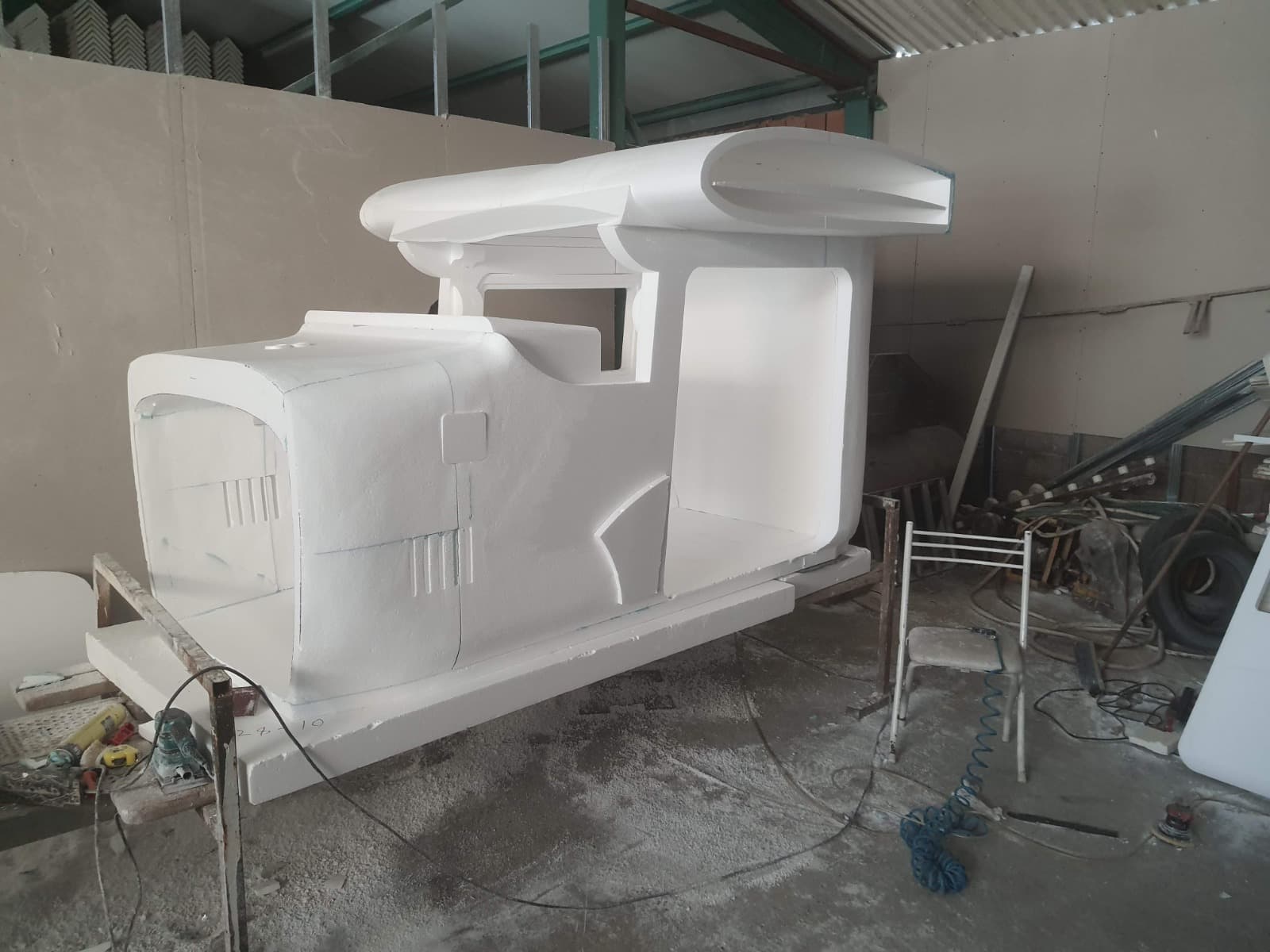
We shape foam into large volumes, reliefs and master patterns. Start with the size and viewing distance, then choose the foam density, detail level and protective finish together.
Cost & setup
Low starting cost
Often economical for large, simple, one-off volumes. Fine finishing, a composite skin, reinforcement and assembly can become the main cost of the finished piece.
Detail & surface
EPS has a bead structure: small edges and fine texture can break away or need filling. XPS has a more uniform cell structure and can be a better starting point for finer machining. Density, tool size and finishing still matter.
Strength & stiffness
Bare foam dents and breaks relatively easily. A reinforced shell and internal frame change the finished construction; the strength of that assembly cannot be inferred from the foam alone.
Weight
Very light core. Coatings, frame, fixings and transport structure add weight.
Use & exposure
Specify a compatible protective system for touch, moisture and sun exposure. Bare foam is not a durable exposed finish.
One-off & repeated production
Well suited to large individual forms. For repeated pieces, a finished foam master can feed a separate mold-making process.
Delivered finish
Raw cut surface, filled and painted surface, or a compatible reinforced skin. A smooth close-view finish adds preparation work.
How we make it
- Choose EPS or XPS, density and the block layout.
- CNC-machine or cut the form, then join sections.
- Prepare the surface and add the agreed coating, reinforcement and finish.
What can be made?
- Large foam sculptures and display forms
- Reliefs, lettering and architectural profiles
- Masters for composite molds
What affects the price?
- Volume and foam density
- Small details and tool access
- Coating and surface quality
- Frame, joints and delivery dimensions
Limitations
- Thin details and exposed edges need special attention.
- Resin compatibility must be planned: styrene-containing polyester can attack unprotected polystyrene.
Common questions
Is a foam sculpture always fragile?
A raw EPS sculpture and a framed, composite-coated sculpture are different constructions. We specify the core, shell and supports separately for the intended use.
EPS or XPS for fine detail?
XPS can offer a more even machining surface. For very fine features, we can assess a denser model material or a separately printed detail instead. The final choice depends on the geometry and finish.
From method to finished form
Explore the documented project or workshop photographs alongside the manufacturing guide.

Modular rock concert environment
Start with a drawing, photo or idea.
If you have not chosen a material, share the setting and approximate dimensions; we can work it out together.
Request a quote